Wellbeing · 4 min
Low libido: tiredness, stress and relationships, talking about it simply
Low libido linked to tiredness or stress? Common causes, talking as a couple, lifestyle habits and when to see a doctor: an open, simple conversation.
 By Rudy Langlet, Aloe Santé advisor · 9 October 2026 · 4 min read
Remembering the paediatrician's appointment while preparing for a meeting, realising there is no milk left while answering an email, rewriting the week's to-do list at midnight... If this sounds familiar, you know what mental load is. It is not just "having a lot to do": it is having to think of everything, all the time.
I juggle several activities too, and I have learned, often the hard way, that the mind needs breaks just as much as the body. In this article I share simple tips to lighten your mental load, find moments of calm and know when to ask for help.
Mental load is the invisible work of organising and anticipating: thinking of tasks, planning them, checking they are done, remembering dates, paperwork, shopping, birthdays. Even when someone else carries out a task, the person who has to remember it carries the load.
It affects both work and personal life, and it adds up. It is often unevenly shared within households and still weighs heavily on women.
A certain amount of stress is part of life: it is the body's normal reaction to a demanding situation, and it helps us rise to it. The problem comes when stress becomes constant and there is no time left to recover.
Body and mind often send signals before we notice. Watch out for:
These signs are not specific and can have other causes. If they last, talk to your GP.
It is not about doing more, but about thinking differently. Here is what works for me and for many people around me.
One single list, in one place (a notebook or an app), rather than sticky notes everywhere. What is written down no longer needs to be remembered.
Each morning, choose three important things to do that day. Anything else is a bonus. You cannot do everything, and that is not a failure.
Dividing up household tasks is good. Handing over the responsibility for remembering them is better. For example: "you take care of the children's medical appointments from start to finish", not "can you book the appointment I wrote down for you?".
A simple meal, a home that is not perfectly tidy, a shorter email: nobody will hold it against you, and you will save energy.
Every "yes" to a new request is a "no" to a moment of rest. You are allowed to take time to think before agreeing.
Finding calm does not necessarily take much time. It is often small, repeated rituals that do you good.
In the evening, I do a little "switch-off": I write down on paper what is left for the next day, then close the notebook. The list is safe, and my mind can rest.
It is often the first casualty of stress, yet it is what helps us recover. Go to bed at regular times, avoid screens in the hour before bed and keep your bedroom quiet, dark and cool.
When we are overwhelmed, we skip meals or snack. Try to keep three simple, varied meals, with fruit, vegetables, wholegrains and protein. Limit excess coffee, especially in the afternoon, as well as alcohol.
No food supplement makes stress or mental load disappear. However, if your diet is less varied during a busy period, some nutrients have a recognised role: for example, several B vitamins and vitamin C contribute to the reduction of tiredness and fatigue. Food supplements should not replace a varied and balanced diet and a healthy lifestyle. Ask a health professional if you are on medication, pregnant or breastfeeding.
There is no shame in getting help. I recommend talking to your GP if:
Your GP can refer you to a psychologist if needed. At work, the occupational health doctor is another person you can talk to. And if you are going through a moment of severe distress, in France call 3114, the free national suicide prevention line available 24/7, or 15 in an emergency.
Write everything on a single list, choose three priorities a day, share the responsibility for tasks (not just doing them), accept "good enough" and learn to say no. And keep a little time for yourself every day.
Persistent tiredness, trouble falling asleep, irritability, forgetfulness, tension in the neck or shoulders and the feeling you can never stop. If these signs last, talk to your GP.
No, no supplement can promise that. Some nutrients, such as several B vitamins and vitamin C, contribute to the reduction of tiredness and fatigue, but they do not replace rest, a varied and balanced diet, or medical advice if stress is weighing on you.
A break ritual, a supplement to complement your diet during a busy period, and a shower product to turn your shower into a real moment of relaxation. Nothing magic: small, regular habits.
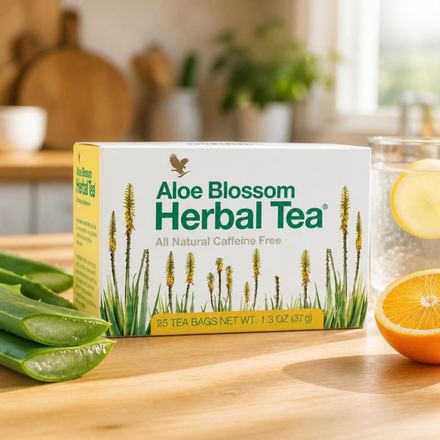
A herbal tea combining orange peel and lemon zest with cinnamon, clove, allspice and ginger.
Why : My break ritual: one sachet in about a litre of water, to drink hot or cold throughout the day. Orange peel, lemon zest, cinnamon, clove and ginger: a real moment of comfort.

An exclusive 55-ingredient formula combining the AOS™ complex with vitamins, minerals and fruit and vegetable phytonutrients.
Why : 2 tablets a day during a busy period. It provides B vitamins (B2, B5, B6, B9, B12) and vitamin C, which contribute to the reduction of tiredness and fatigue. Do not exceed the daily dose; ask a health professional if you are pregnant, breastfeeding or on medication.

A very gentle body wash that cleanses and revitalises the skin.
Why : For an unhurried evening shower: I lather gently in circular movements, then rinse. A very gentle, pH-neutral, sulfate-free formula that cleanses the skin and leaves it soft and refreshed.
These tips are general and do not replace advice from a health professional. Pour votre santé, pratiquez une activité physique régulière. www.mangerbouger.fr — For your health, exercise regularly. Food supplements should be used as part of a healthy lifestyle and should not replace a varied, balanced diet. Do not exceed the recommended daily dose.

Low libido linked to tiredness or stress? Common causes, talking as a couple, lifestyle habits and when to see a doctor: an open, simple conversation.
Bloated stomach after meals? Eating pace, foods, fibre, water and movement: simple everyday habits for bloating discomfort, and when to see your doctor.

How do you drink more water without thinking about it? Our simple everyday hydration tips, even if you don't like plain water, plus our aloe vera pairing.
 A question? Message us