Exercise · 3 min
Looking after your figure: everyday habits
Your plate, hydration, activity, sleep and meal times: our simple tips for looking after your figure every day, and Forever's C9™ programme for a 9-day framework.
 By Rudy Langlet, Aloe Santé advisor · 9 October 2026 · 4 min read

In the morning, your first steps feel a bit stiff. After a long meeting, you get up holding your back. After weekend gardening, your knees remind you they are there… Stiffness is one of those small discomforts that creep in with time, age or a too sedentary lifestyle.
The good news is that movement is your joints' best friend. In this article I share my routine for loosening up gently in the morning, the gentlest activities for your body, everyday habits that are kind to your joints, and the signs that should lead you to see a doctor.
During the night we stay still for several hours. Joints and muscles, which love movement, then need a few minutes to get their suppleness back. That is why stiffness is often more noticeable when you get up or after sitting for a long time.
Several factors can make it worse:
Most of the time, this stiffness fades within a few minutes once you start moving. If it lasts a long time every morning or comes with other signs, talk to your doctor. I come back to this at the end of the article.
Before you even put a foot on the floor, take five minutes to wake your body up gently. The golden rule: slow movements, no jerking and no pain.
A warm shower when you wake up can also help you feel more supple. And if a movement hurts, do not force it: reduce the range or move on to the next one.
When we feel stiff, we tend to move less… and the opposite is often what we need. Regular physical activity is part of health professionals' advice for keeping joints mobile. For adults, the World Health Organization recommends at least 150 minutes of moderate activity a week, for example thirty minutes five days a week, plus muscle strengthening twice a week.
Build up gradually, at your own pace. Twenty minutes every day is better than one big session on Sunday. If you have pain, a health condition or are starting again after a long break, ask your doctor before you begin.
After a session or a long day on your feet, a massage with a cooling lotion is a pleasant moment for your legs and shoulders.
A varied diet also plays its part in the comfort of your whole musculoskeletal system. A few pointers:
Nutritionally, calcium, magnesium and vitamin D contribute to the maintenance of normal bones and to normal muscle function. Vitamin C contributes to normal collagen formation for the normal function of cartilage. Forever Calcium combines these nutrients.
And remember to drink regularly: around 1.5 litres of water a day, more when you exercise. Food supplements should not replace a varied and balanced diet and a healthy lifestyle.
Passing stiffness that goes away when you move is common. However, see your doctor if:
Your doctor can look for a specific cause and, if needed, refer you to a physiotherapist who will suggest suitable exercises. Do not start intense exercise on your own if you are in pain: a personalised programme is better.
After several hours without moving, joints and muscles need a few minutes to get their suppleness back. Lack of physical activity, unusual effort the day before or age can make this stiffness worse. If it lasts more than half an hour every morning, talk to your doctor.
Gentle activities are ideal: walking, swimming, aqua aerobics, cycling, gentle yoga, tai chi. Start gradually and ask your doctor if you have pain or a health condition.
Generally, moving gently helps you loosen up, while staying still keeps the stiffness going. But if a joint is swollen, warm or very painful, rest it and see a doctor.
Start in bed with slow stretches, ankle and wrist circles, then bring one knee at a time towards your chest. Once you are up, roll your shoulders and march on the spot for a few steps. Always without forcing or pain.
A drink for my morning routine, a supplement for my diet and a cooling lotion for massage after exercise. They are not medicines: they go alongside movement, they do not replace it.

Forever aloe vera gel enriched with glucosamine, chondroitin and MSM, with citrus notes (lemon, orange). A favourite of active people.
Why : 40 ml twice a day, neat or diluted in water or juice. A drink with 89.6% aloe vera gel, glucosamine, chondroitin and MSM, citrus-flavoured and shellfish-free. If you are pregnant or breastfeeding, for children, if you have diabetes or take medication, especially anticoagulants: ask your doctor first.
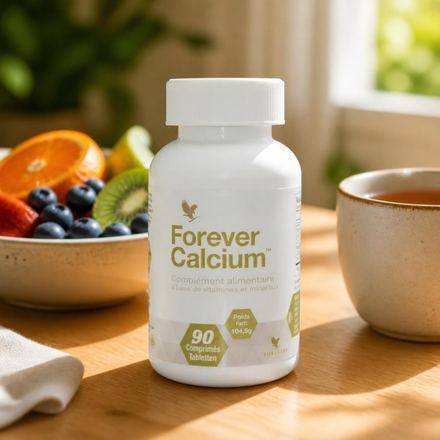
Vitamins C and D with calcium, magnesium, manganese, zinc and copper.
Why : 4 tablets a day. Calcium, magnesium and vitamin D contribute to the maintenance of normal bones and to normal muscle function; vitamin C contributes to normal collagen formation for the normal function of cartilage. Do not exceed the daily dose; if you take medication, ask for advice.
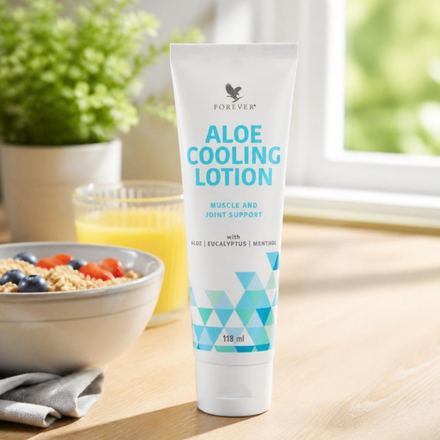
An aloe vera lotion with an instant cooling effect, popular after sport or a long day on your feet.
Why : After sport or a long day on your feet: apply generously and massage in. With menthol, eucalyptus and camphor, for an immediate cooling feeling. Do not apply to the face or broken skin, wash your hands after use and keep out of reach of children.
These tips are general and do not replace advice from a health professional. Pour votre santé, pratiquez une activité physique régulière. www.mangerbouger.fr — For your health, exercise regularly. Food supplements should be used as part of a healthy lifestyle and should not replace a varied, balanced diet. Do not exceed the recommended daily dose.

Your plate, hydration, activity, sleep and meal times: our simple tips for looking after your figure every day, and Forever's C9™ programme for a 9-day framework.
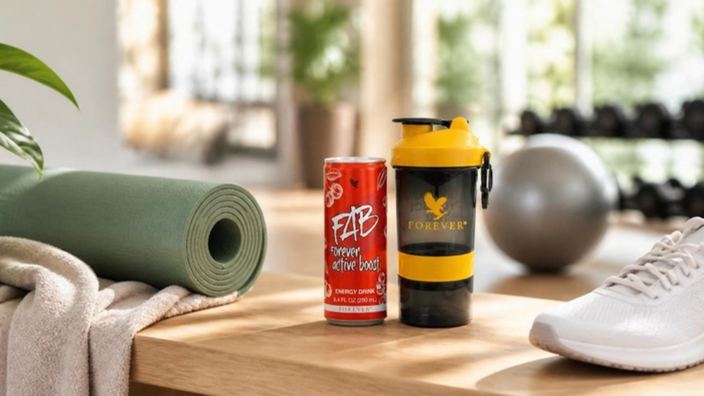
Want to get back into exercise without giving up? Our tips for easing back into physical activity, planning your week and keeping it up over time.
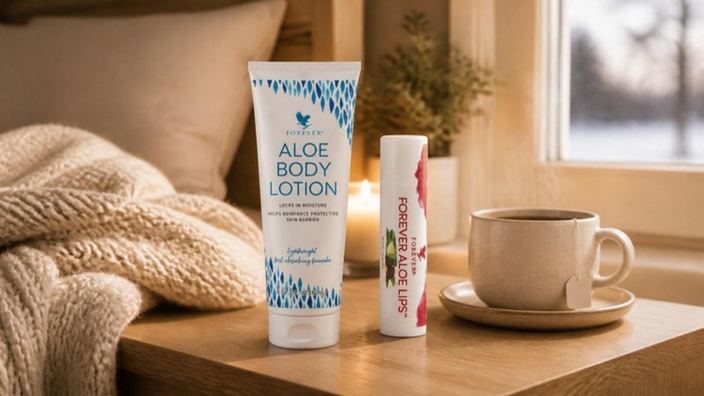
Tight skin, dry hands and lips? Shower habits, body and face moisturising, lip care: the simple reflexes that keep your skin soft all winter long.
 A question? Message us