Hair · 4 min
Hair: a gentle everyday routine
Shampoo, conditioner, drying, hair oil: the simple steps of a gentle hair care routine for soft, shiny, manageable hair every day.
 By Rudy Langlet, Aloe Santé advisor · 9 October 2026 · 4 min read
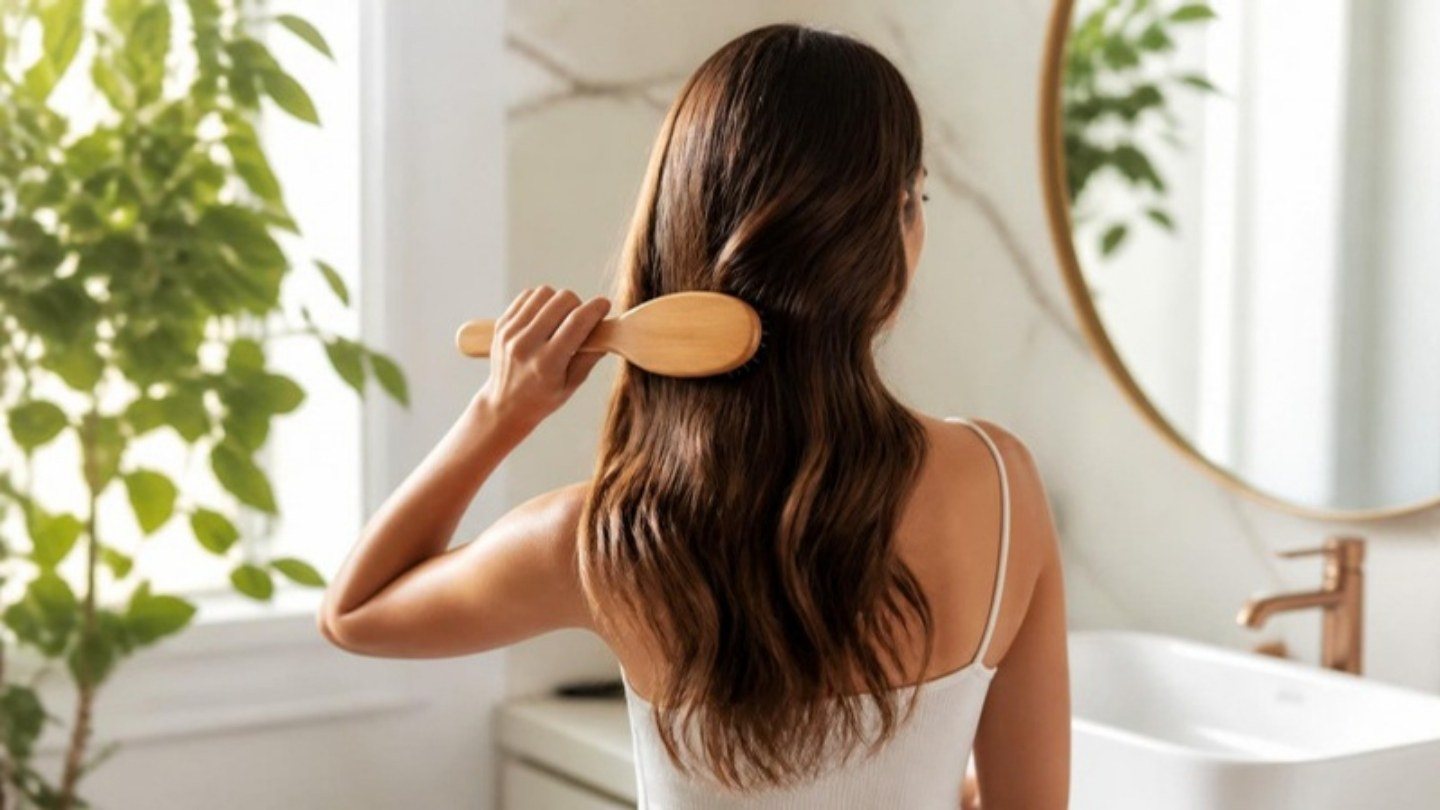
Hair on your brush, in the shower tray, on your pillow… When you feel you are losing more than usual, it is easy to worry. It is a question I am often asked, especially in autumn.
In my article on a gentle hair routine, I talked about washing and caring for your lengths. Here I take a different angle: understanding why hair falls out, telling normal shedding apart from hair loss that needs medical advice, and adopting habits that are kind to your hair every day. No miracle product here: no hair care or supplement makes hair grow back.
Losing hair every day is perfectly normal. Each hair goes through a three-stage life cycle:
Because not all our hairs are at the same stage at the same time, we lose a few every day. Losing around 50 to 100 hairs a day is often considered normal.
Do not count your hairs one by one: that would only cause needless stress. Just know that on wash and brushing days you see more, as hairs that were already loose come away together. What should catch your attention is a clear and lasting change: handfuls of hair, a widening parting, thinner patches.
Many people notice their hair falls out more in September and October. Dermatologists call this seasonal shedding. One common explanation is that more hairs enter the resting phase over the summer, then fall out a few weeks later.
This shedding is usually:
During this time, the most useful thing is to be gentle with your hair and scalp, and to look after your diet. If the shedding goes on for more than a few weeks or seems really heavy, talk to your doctor.
Outside the seasons, several situations can lead to heavier shedding. It often happens two to three months after the trigger, which makes the link hard to spot:
Only a doctor can tell what is going on, sometimes with a blood test. This matters, because the right response really depends on the cause.
Beyond your washing routine, it is often small everyday habits that weaken hair. Here is what I recommend:
Above all, do not pile on products hoping to stop the shedding: a clean scalp, gentle handling and patience are worth more than a stack of treatments.
Hair is mainly made of keratin, a protein. A varied diet gives it what it needs:
Nutritionally, zinc and biotin contribute to the maintenance of normal hair. That is why I like Forever Marine Collagen, which contains both, along with marine collagen and vitamins A and C.
One word of caution: do not take iron supplements without your doctor's advice. Low iron is checked with a blood test, and too much iron is not desirable. And I always say it: food supplements should not replace a varied and balanced diet and a healthy lifestyle.
Make an appointment with your GP or a dermatologist if:
The earlier the cause is found, the better the care can be tailored. Do not hesitate to see someone: hair loss, even when harmless, can affect your mood, and that is reason enough to talk about it.
Losing around 50 to 100 hairs a day is often considered normal. You see more on wash days. A clear and lasting change is what should lead you to see a doctor.
Many people notice seasonal shedding in September and October. It is usually temporary, diffuse and followed by regrowth. If it lasts more than a few weeks, talk to your doctor.
No vitamin makes hair grow back. Zinc and biotin contribute to the maintenance of normal hair, and a varied diet provides them. If the shedding worries you, ask your doctor to look for a cause, such as low iron.
Yes, major stress or an emotional shock is one of the common causes of diffuse shedding, often two to three months later. It is usually temporary. Seeing a doctor makes sure there is no other cause.
A supplement for your diet, a gentle shampoo and a light mist. None of these products stops hair loss or makes hair grow back: they simply support a kind, gentle routine.
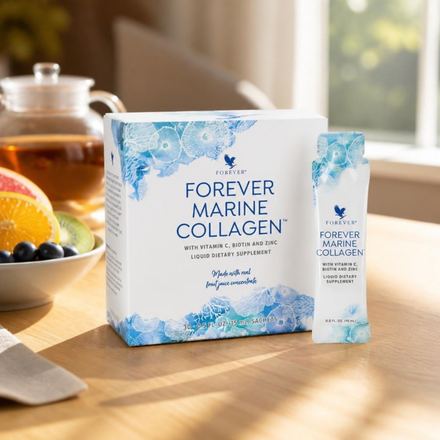
A marine-collagen food supplement to add to your daily beauty routine.
Why : One sachet a day, neat or diluted in water or aloe vera. It contains biotin and zinc, which contribute to the maintenance of normal hair. Contains fish collagen: avoid if you are allergic to fish; if you are pregnant or breastfeeding, for children or if you take medication, ask a healthcare professional.
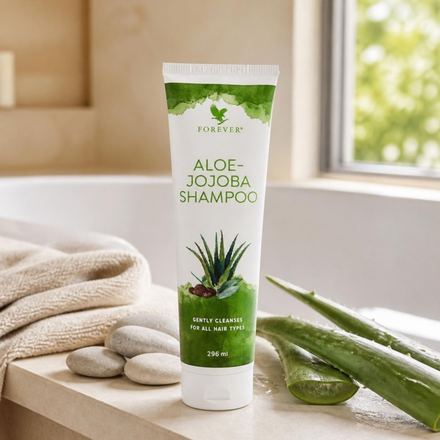
Gently washes and moisturises all hair types, leaving hair soft and shiny.
Why : To wash without harshness: a small amount on wet hair, massage your scalp with your fingertips, then rinse thoroughly. No added sulphates, suitable for daily use.
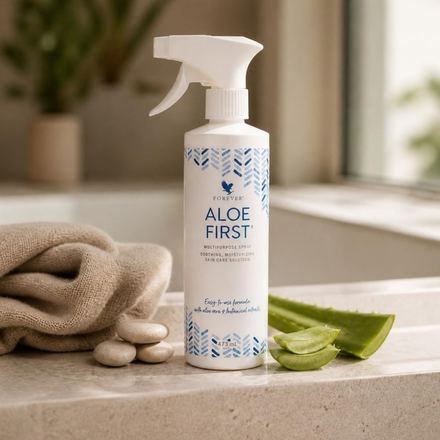
A daily mist that moisturises, refreshes and tones the skin, with 11 plant extracts, aloe vera, propolis and allantoin.
Why : After shampooing, on towel-dried hair: a few sprays over the lengths and scalp for a fresh feeling. Its neutral pH suits sensitive skin.
These tips are general and do not replace advice from a health professional. Pour votre santé, pratiquez une activité physique régulière. www.mangerbouger.fr — For your health, exercise regularly. Food supplements should be used as part of a healthy lifestyle and should not replace a varied, balanced diet. Do not exceed the recommended daily dose.
Shampoo, conditioner, drying, hair oil: the simple steps of a gentle hair care routine for soft, shiny, manageable hair every day.

Your plate, hydration, activity, sleep and meal times: our simple tips for looking after your figure every day, and Forever's C9™ programme for a 9-day framework.

Tight skin, dry hands and lips? Shower habits, body and face moisturising, lip care: the simple reflexes that keep your skin soft all winter long.
 A question? Message us